
L'Enfant Terrible: Alexander McQueen as Fashion's Dearest Rebel
By Adrianna Renae

He was a visionary. He revolutionized fashion design with the development of technology. He rejected the clichés of modern fashion, using garments to evoke emotion and sensibility.
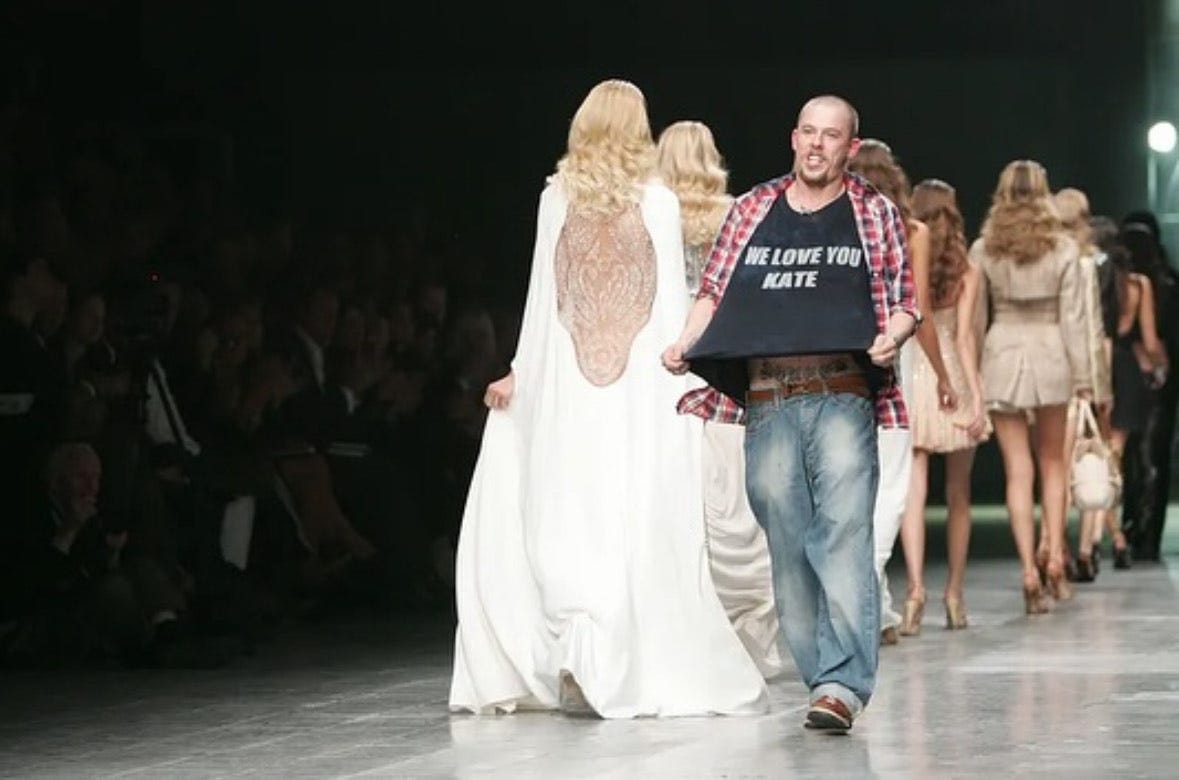
Alexander McQueen made his mark in the fashion industry, being forever remembered as one of the greatest to have ever done it. His complex ideals and courage to create without barriers landed him the most controversial career of all time. His shows created depth and pushed conversations that others would have deemed too unprincipled.
His runway presentations featured La Poupée, models with distorted configurations, incorporating art and styles that included low-cut pants and macabre shift dresses. After the disappointment of his first Givenchy showing, he returned with a collection for his own label titled "It's A Jungle Out There." This was a response to criticism and a showcase of his personal feelings about the expectations and harsh treatment in the fashion industry.
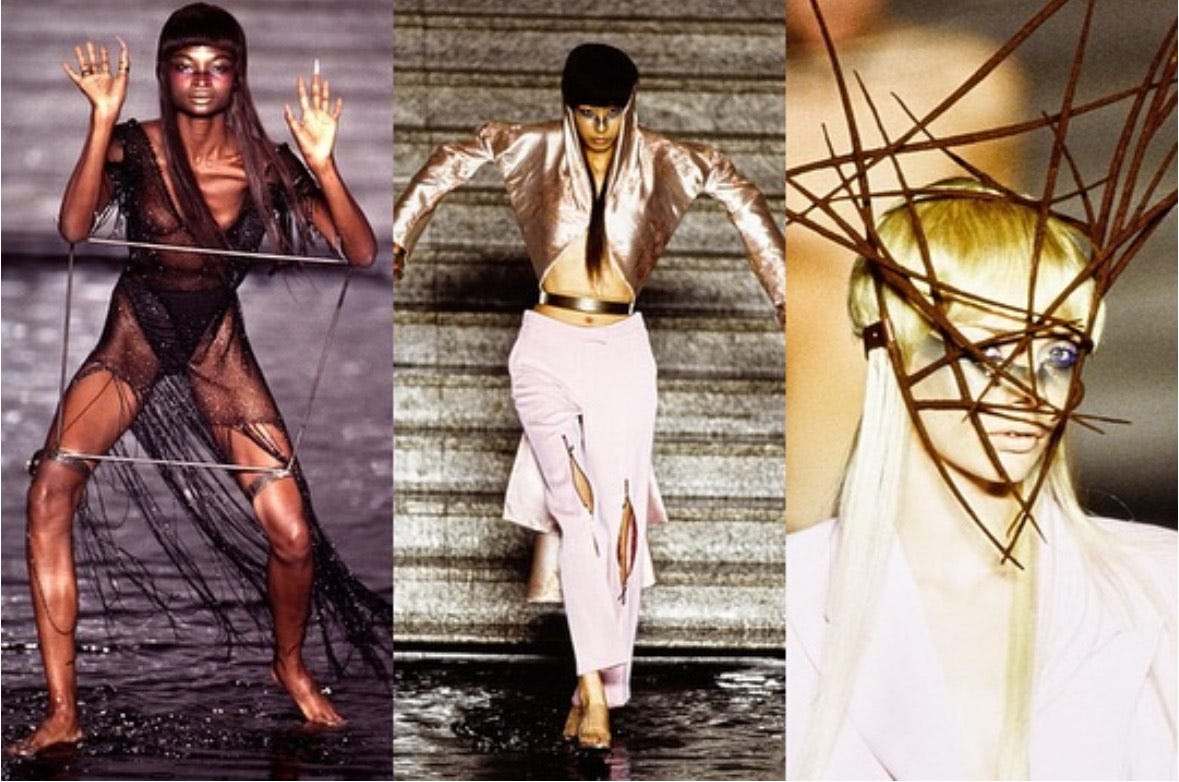
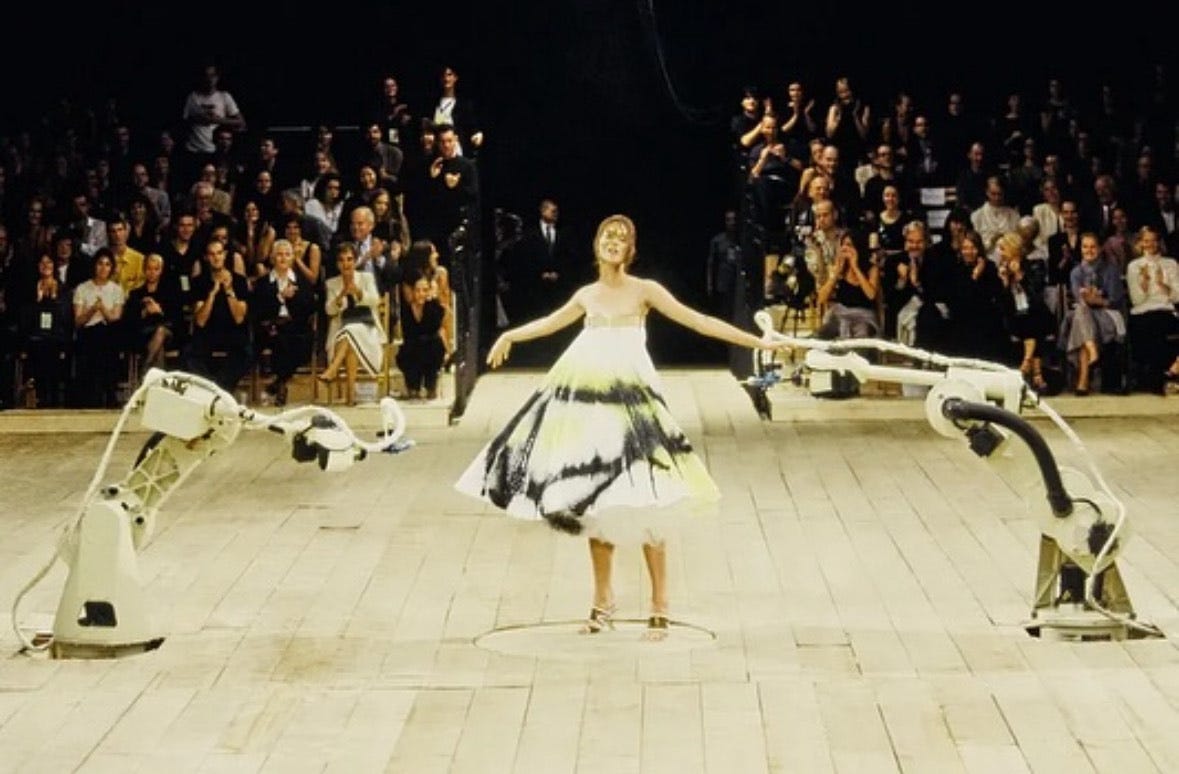
His No. 13 show is one of the biggest fashion moments in history.
Taking place in Central London, McQueen focused on the art of movement and design. For the closing, model Shalom Harlow became a human canvas, dressed in an all white dress and a leather belt. She stood in the center, twirling in a robotic way as the robots around her began to spray her dress with yellow and black paint. This show demonstrated the computerized elements of the production process, part of the magic that we don't see.
McQueen thought bigger than just adapting to trends and going viral for seasonal styles. He brought conversations to runways and made it a space for discovery.
Exploring him, watching his shows and getting to know the intent behind is something I find pretty fascinating.